

Relationship
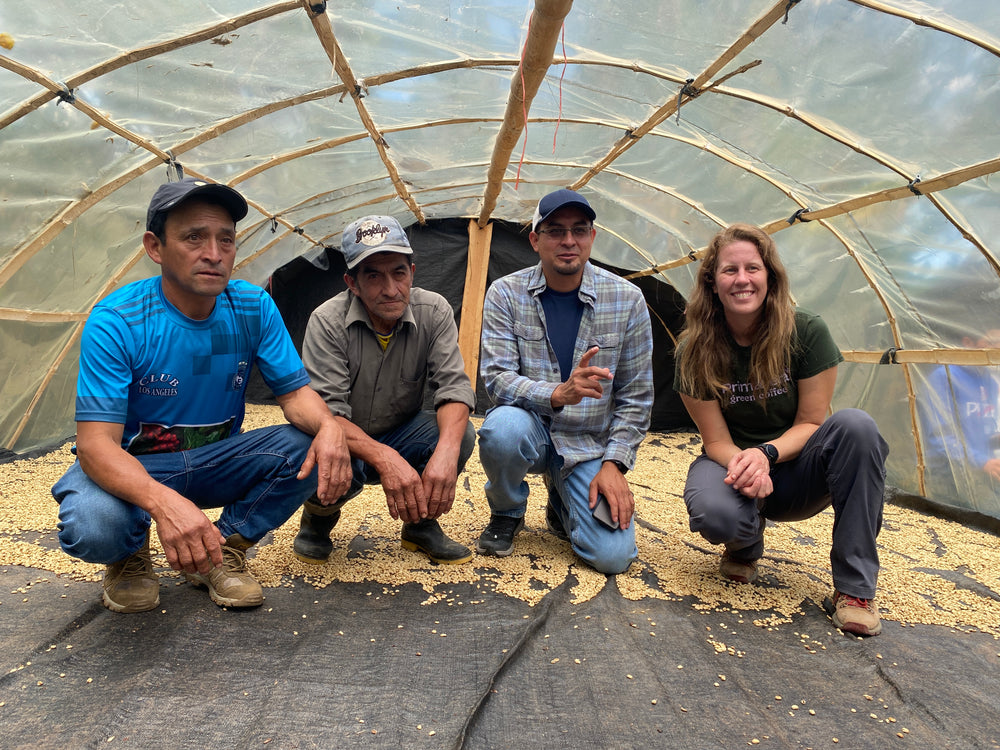
Our partnership with Primavera Green Coffee goes back nine years and has been built almost entirely around Guatemala, making this Peru the first time we have explored a new origin together. As we decided to keep our lineup fresher and more seasonal this year, we needed a new anchor coffee to replace the Primavera Family blend. Talking to Primavera was the obvious first call. Hillary, as always, was exceptional in guiding us through the options and helping us find the right fit. What makes this purchase particularly exciting is that Piura is new territory for Primavera too. Their team traveled to the region specifically to build new sourcing relationships, and the Pumurco cooperative was one of the first stops. We are glad to be along for that journey.
Country
Although coffee production in Peru dates back to the 18th century, it wasn't until the early 20th century that the country began exporting in meaningful volumes. A mountainous country, farms are often remote and challenging to reach. Most production happens on the eastern slopes of the Andes, carried out by smallholder farmers working plots of a few hectares. As of 2017, coffee was Peru's most valuable agricultural export, though it now faces growing competition from grapes, blueberries, and avocados. Infrastructure remains a persistent challenge as the terrain makes transportation difficult and limits how many producers can consistently access specialty markets. That said, Peru is the world's leading producer of fair trade and organic Arabica coffees, and a quiet but steady wave of innovative producers and cooperatives is beginning to put it on the specialty map in a more serious way.
Region – Piura
Piura sits in the far north of Peru, bordering Ecuador, and is one of the country's less visible coffee regions despite producing consistently interesting lots. Most of its coffee grows in the inter-Andean valleys of the province of Huancabamba and in the Pacaipampa area, at elevations ranging from 900 to 2,000 meters above sea level. The climate is semi-tropical, shaped in part by the Humboldt Current off the Pacific coast, which moderates temperatures and creates the low rainfall and strong sunlight that characterize the region. Farms here tend to be small, averaging around 1 hectare, and are largely cultivated under shade trees including guabo, cedar, pine, and citrus. The region is not as well known to international buyers as Cajamarca to its south or Amazonas further east, but it produces coffees with a distinct chocolate and caramel character that rewards attention. Primavera's team traveled to Piura specifically to explore new sourcing partnerships, and Pacaipampa was one of their first visits.
(Sources: Perfect Daily Grind, Primavera Green Coffee, Khipu Coffee)
Cooperative – La Cooperativa Agraria Pumurco / Los Páramos
La Cooperativa Agraria Pumurco, known as Los Páramos, was founded in 2014 with the goal of connecting smallholder producers in the Pacaipampa area to better-paying specialty markets. It started with 22 founding members and has grown to 132 active members across seven villages in the area: Lagunas de San Pablo, Tauma, El Carmen, Mushcapan, La Unión, San Juan de Romeral, and Pumurco. Average farm size is 1 hectare, known locally as a chacra, and the cooperative is 35% women-led. In 2025, 60 of its producers achieved organic certification, a milestone that reflects the cooperative's broader ambitions for quality and sustainability. The lot is exported by Amacafé, a young organization based in Piura led by president Yuliana Gonzalez, a Q Grader and daughter of coffee farmers, who is working to expand the region's reach in specialty markets and provide ongoing technical assistance to producers.
Variety
This lot consists of Bourbon, Catimor, Typica, and Mundo Novo, a set of varieties that reflects the diversity typical of small cooperative lots in northern Peru.
Bourbon is a classic heirloom variety with a storied history across Latin America. Known for its fuller body and complex sweetness, it adds depth and richness to the cup, typically contributing vibrant fruit flavors, balanced acidity, and a smooth finish.
Typica is one of the foundational Arabica varieties and the ancestor of many cultivars grown around the world today. Trees are tall, low-yielding, and susceptible to disease, but the cup quality they produce is exceptional: clean, refined, and capable of great clarity and sweetness at high altitudes.
Catimor is a hybrid of Caturra and Timor Hybrid, bred for disease resistance and high yield. It is a variety that divides opinion in specialty circles as it can produce astringent notes when underripe or poorly processed, but in the hands of attentive producers working at altitude, it contributes body and structure to a blend. The cooperative's commitment to careful cherry selection and processing mitigates the risks the variety carries.
Mundo Novo is a natural hybrid of Typica and Bourbon, appreciated for its resilience and yield. It contributes a well-rounded sweetness and balanced acidity, complementing the more expressive varieties in this lot.
(Source: World Coffee Research)
Process
This coffee is given a traditional washed process, though with a two-stage fermentation approach common among producers in the Pacaipampa area. After selective picking, cherries undergo a first fermentation of 12 to 24 hours before depulping. The parchment is then transferred to tanks for a second dry fermentation, also lasting 12 to 24 hours, before being thoroughly washed. Drying is done in the sun for 4 to 8 days. Most producers in the cooperative use patio drying, while some have built raised drying sheds elevated 40 to 60 centimeters above the ground to improve airflow and even moisture loss. The result is a clean, settled cup with the milk chocolate body and blackberry brightness we found on the cupping table.
(Source: Primavera Green Coffee)