Relationship
This lot came to us through the same connection that produced the El Diviso selections. Corey and Brian from Falcon Coffee introduced us to Siruma Coffee after the SCA World Expo in San Diego, bringing their team to our Arts District shop for a conversation about competition season and how we might work together. That visit opened the door to a deeper pool of Colombian lots than a single importer relationship would allow, with Falcon continuing to handle logistics on the US side. Siruma is a Colombian exporter built around the idea that specialty coffee should create lasting value at origin, supporting better farming practices and stronger community relationships through their work and through the Apuna Foundation, which focuses on social development and gender equity in coffee-growing communities.
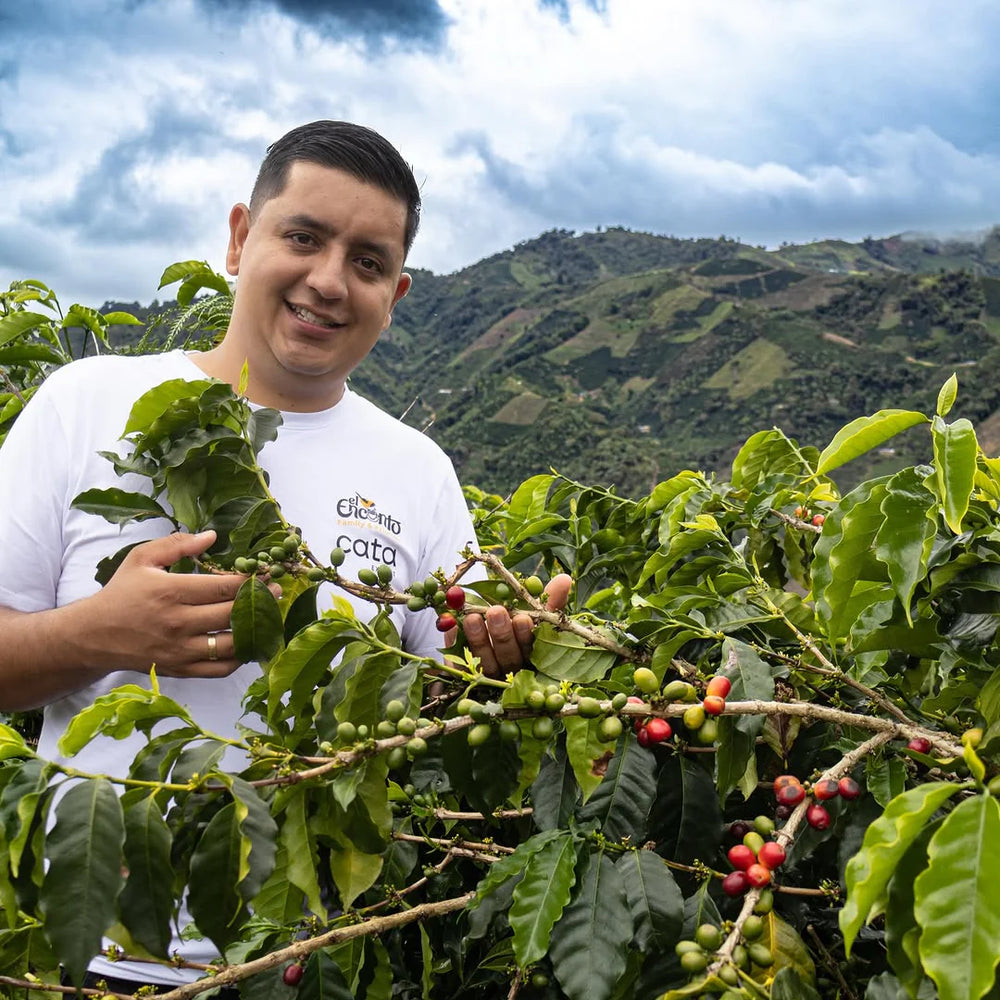
This is our first time working with Franky Hoyos and Finca El Encanto, and our first time featuring Papayo as a variety in the roastery.
Country - Colombia
One of the best known countries in the specialty coffee scene, Colombian coffees have carved a special place for themselves in the market and here at Boxx. It is an origin dear to our hearts and one that we try to showcase constantly in different offerings. Coffee was first introduced to the country in the early 17th century by Jesuit settlers and quickly grew popular as more fincas started growing it over time. Today, Colombia stands as one of the most prominent origins in the specialty coffee scene and is one of the pioneers in different processing methods.
Region - Huila, Pitalito
Finca El Encanto sits in Pitalito, in the upper Magdalena River valley in southern Huila, at the foot of the Andes. Huila is consistently among Colombia's top-producing departments, and the valley's airflow and buffered temperatures promote slow cherry maturation, which helps build dense sugars and translate into cups with sweet structure and bright acidity. This Papayo lot comes from 1,230 to 1,250 meters above sea level.
Farm - Finca El Encanto
Finca El Encanto is a family farm in Pitalito run by Franky Hoyos, now in its fifth year of cultivating Papayo. The farm has been in the family across three generations, each building on what the previous one learned, and the Papayo trees on the property are among the more established plantings of the variety in the area given how recently it has come to wider attention. Franky's approach to coffee is rooted in the idea that every cup should carry an emotional register. As he puts it: each cup of coffee provides an emotional memory of a sweet and happy time, and each cup is a celebration of what used to be. For Franky, growing gourmet varieties is a way of breaking with tradition, not out of novelty, but because he believes specialty coffee can offer something that goes beyond the functional, something closer to a sensory memory. That philosophy is visible in how carefully he approaches cherry selection and processing at every stage.
Variety - Papayo
Papayo is a rare Arabica variety found almost exclusively in Huila, Colombia, and little is known about how it arrived there. The name is assumed to come from the papaya fruit, which shares the variety's distinctively elongated cherry shape. It was originally thought to be a mutation of Caturra, but genetic testing by World Coffee Research indicates a close relationship with Ethiopian landraces, placing it in the same broad genetic family as some of the most aromatic and expressive coffees in the world. Much like Ombligon, Papayo sits at the frontier of what is being understood and documented about Colombia's emerging gourmet varieties, and formal research into its origins and agronomic profile is still developing. Finca El Encanto's Papayo trees are four years old, a meaningful stage for a variety at this point in its documentation.
(Source: Sucafina citing World Coffee Research genetic testing, Ozone Coffee)
Process - Thermal Shock Anaerobic Natural
Cherries are harvested selectively with Brix levels monitored between 22 and 28 to determine optimal ripeness. Once brought to the processing plant, the coffee undergoes a first fermentation stage: a 50-hour aerobic oxidation of the whole cherry, during which alcohol compounds begin to develop. The cherries are then floated and disinfected before being placed into 210-liter or 1,000-liter open containers for a continued fermentation phase, allowing heat to build within the mass and further develop the desired alcohol compounds.
After 12 hours, a thermal shock is applied at 50 degrees Celsius. This opens the coffee spores for inoculation with cocoa and strawberry yeasts, which are used to shape the flavor profile. The coffee then undergoes a submerged anaerobic fermentation for 50 hours in sealed containers fully submerged in water. Once fermentation is complete, the coffee is washed and moved to mechanical dryers for a 40-hour drying process, which seals the fermentation and locks in the expected flavor profile.
(Source: Finca El Encanto producer notes)