

Relationship
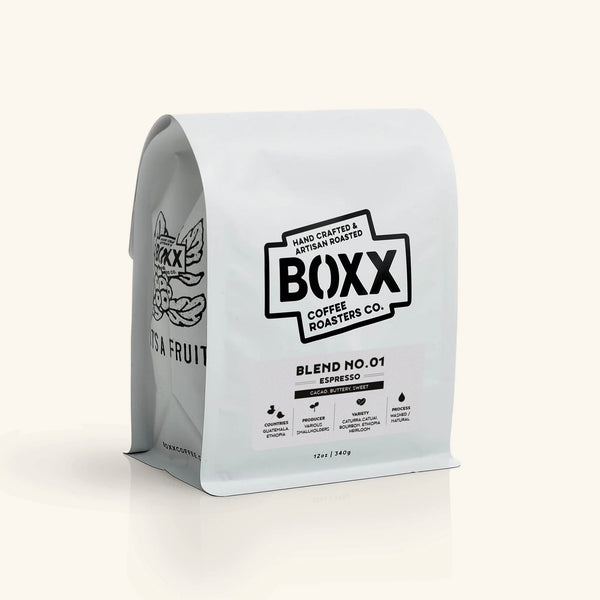
This coffee comes through Falcon Coffee, one of our most active sourcing partnerships. Corey, Nathan, and Alejandra have been central to how we approach sample selection across multiple origins, and Ethiopia is no exception. Blend sourcing rounds are particularly demanding because we are not just evaluating whether we like a coffee on its own; we are asking whether it is compatible with an existing base, whether the roast profiles can align, and whether the result improves what we already have. Falcon's consistency in understanding what we are looking for made this process a lot more focused than it might otherwise have been
Country
Ethiopia is the birthplace of Arabica and a place where coffee is woven into daily life. From home roasting to the bunna ceremony brewed in a clay jebena, coffee is not just a crop. It is a social ritual and a marker of hospitality, celebration, and conversation. Generations of farmers have tended coffee in mixed garden systems around their homes, intercropping with food and shade trees and passing seeds and knowledge within the community.
Economically, coffee is Ethiopia's most important agricultural export and a primary source of rural livelihoods. Most production comes from smallholder families who pick ripe cherry and deliver it to local washing stations or dry it at home for natural processing. The station-centered system emphasizes careful cherry selection, clean fermentation, and slow drying, steps that drive quality and preserve the character of Ethiopia's broad genetic base of landraces. High domestic consumption keeps a meaningful share of the harvest in-country, while exported lots like this one showcase Ethiopia's enduring connection to coffee on the world stage.
(Source: Coffee Story: Ethiopia, USDA FAS Coffee Annual)
Region – Guji
Guji sits in southern Oromia, with Shakiso and Adola as key towns after the zone split from Borena in the early 2000s. Beyond coffee, the area is known for dense highland forests and gold mining around Shakiso, factors that shape local livelihoods and infrastructure.
Coffee here was once sold under the broader Sidamo designation, but Guji has since earned its own distinct identity in the specialty market. The region is marked by steep mountainous terrain, ample and well-distributed rainfall, and volcanic soils that are rich in nutrients and minerals. Anasora Site sits in the South Guji zone at 2,200 to 2,300 meters above sea level, notably high even within a district known for elevated farms. At these altitudes, warm days and cool nights slow cherry maturation significantly, building dense, sugar-rich seeds that translate to clarity and aromatic intensity in the cup. Coffee here grows as semi-forest, under indigenous shade trees intercropped with spices, tubers, and false banana, a growing environment that reflects generations of traditional smallholder farming and is a meaningful part of why Guji naturals carry the fruit complexity and clean structure they do.
(Sources: Sucafina, Producer Notes)
Processing Station – Anasora Site
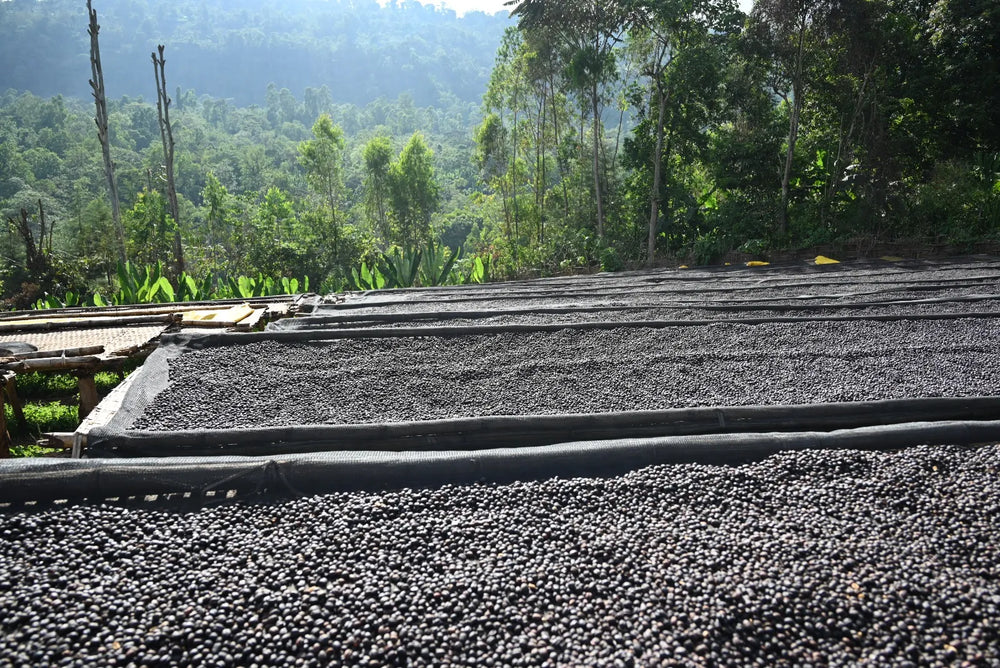
The Anasora washing station is located in the South Guji zone, built in 2018 on the banks of the river Turo and operated by Kerchanshe Trading PLC, one of Ethiopia's established specialty exporters. The station was built with a specific purpose: to source exclusively ripe, red-cherry coffee from this very high altitude environment and process it with the consistency and attention that the terroir deserves. Around 350 smallholder farmers from the surrounding Anasora village community contribute cherry to the station, which operates 200 African drying beds and employs several thousand workers at peak harvest. The station processes both washed and natural lots, and its natural program is where the altitude and the careful cherry selection most clearly show in the cup.
(Sources: Producer Notes)
Variety
Ethiopia is the birthplace of Arabica and Africa's largest coffee producer. Coffee accounts for 30 to 35 percent of the country's total export earnings and the livelihoods of roughly 25 percent of the population are directly or indirectly tied to the coffee value chain. Most production comes from smallholder families working plots of a few hectares, picking ripe cherry by hand and delivering it to local washing stations where lot separation and meticulous processing shape flavor. High domestic consumption, driven by a deep-rooted coffee culture that predates commercial export by centuries, keeps roughly half of every harvest in-country. Exported lots like this one represent the portion of Ethiopian production that reaches the international market, and traceable, station-level coffees remain a small share of that.
(Source: World Coffee Research, Coffee Story: Ethiopia)
Process – Natural
Only fully ripe red cherries are selectively handpicked by out-grower farmers and delivered to the station. On arrival the cherry is rested at room temperature of 24 degrees Celsius for 10 hours for an initial aerobic fermentation in the warehouse. The cherry is then transferred to African raised beds constructed from bamboo, mesh wire, and shade netting, where it dries for 3 to 4 weeks under natural sunlight. Throughout the drying period the cherry ferments slowly on the beds, with producers rotating it regularly to ensure even moisture loss and prevent spoilage. That slow, carefully managed drying at over 2,200 meters is what keeps the blueberry and orange character so clean and defined in the cup.
(Source: Producer Notes)